My actual system for sharing work consistently as a lead engineer: how I capture ideas, post without breaking focus, and keep social media from eating my day.
I have a folder full of things I never shipped. Not code. Posts.
Ideas, project write-ups, small wins, weird bugs I solved at 1am. All of it sitting in my notes, none of it making it out into the world. For a long time I told myself I'd start posting "when things calm down." They never calm down.
Then I read Ahmed Nagi's piece on building a habit of building in public, and one line stuck: his process had to stay distraction-free, because he's an engineer and the last thing he needs is his flow broken by scrolling a feed. That's exactly my problem. I want to share, but I don't want social media to colonise my brain.
So I built a system around that one constraint. Here's how it actually runs for me.
If you're an engineer who keeps meaning to post and never does, this is for you. If you're not technical and you're just trying to be more consistent online, the same system works. The job titles change, the discipline doesn't.
The real problem isn't ideas, it's the cost of switching
Most people think they don't post because they have nothing to say. Wrong. You have plenty to say. You just don't want to pay the tax.
The tax is context-switching. When I'm deep in a problem, dropping out to open Twitter, write something clever, and check if it landed costs me far more than the ten minutes it looks like. It breaks the flow. Getting back in takes another twenty minutes, easily. So my brain, being lazy and smart, just refuses.
The fix isn't more motivation. It's making sharing cost almost nothing in the moment. Two separate jobs:
- Capture happens any time, in seconds, with zero thinking.
- Publishing happens once, at a fixed time, away from real work.
Keep those two apart and the whole thing gets easy. Mix them and you'll quit by week two.
Capture ideas the second they happen
The ideas worth sharing show up while you're working, not while you're trying to think of something to post. So I catch them on the spot and move on.
My setup is boring on purpose:
- Apple Notes for anything I can type in five seconds. It syncs across my Mac and phone, so it doesn't matter where I am.
- Voice memos when I'm mid-thought and don't want to stop to type. I just talk. I clean it up later.
- A few fixed buckets so I never sort while capturing: one for post ideas, one for longer blog drafts, one for things I learned the hard way.
The rule that makes this work: capturing is not posting. I don't refine, I don't second-guess, I don't open the app to "just check one thing." I dump the idea and go back to what I was doing. The judging happens later, on its own time.
This is the same instinct behind keeping a clean engineering workflow. I wrote about it from the bug-fixing angle in how to fix any bug with the repro-first method: write the thing down before you act on it. Capture first, decide later.
One posting slot a day, and only one
Here's where most "build in public" advice falls apart. People tell you to be everywhere, all the time. That's a part-time job nobody warned you about.
I post once a day, in one slot. Ten minutes in the evening: open the notes, pick one idea, sharpen it, post it. That's the whole ritual. I start with one platform, not five. Right now that's X, because it's fast and low-stakes and lets me build the rhythm before I worry about anything else.
The fixed slot matters more than the platform. When posting lives at a set time, it stops competing with deep work. It's not a thing I might do whenever; it's a thing I do at 8pm, the same way I might answer email at a set hour. The decision is already made, so it doesn't drain me during the day.
Timing the post itself: I aim for mid-morning or late afternoon, when more people are around. I don't agonise over it. I write in the evening, schedule for the next good window, done. If you build software, you already know the value of a job that runs on a schedule instead of when someone remembers to trigger it. Same idea, applied to your own output.
Engagement on a timer, not on a whim
I know myself. Open the app to reply to one comment and forty minutes vanish. So engagement gets the same treatment as posting: boxed in.
What that looks like:
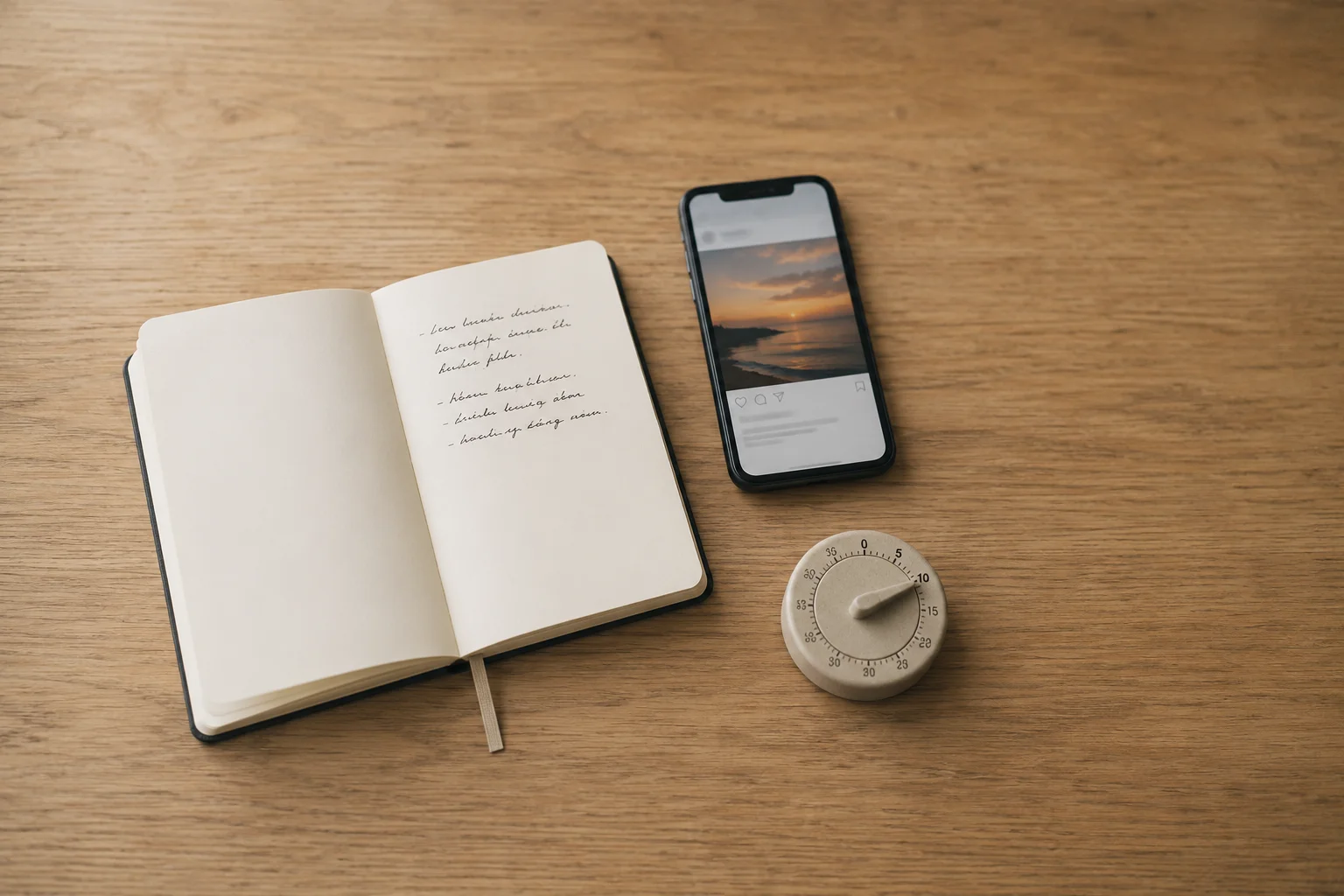
- Right after I post, a ten-minute timer to reply to anyone who responded and engage with a few people. Timer goes off, I close the app.
- One or two short engagement breaks later in the day, ten minutes each, also timed.
- A private list of people whose work I actually care about, so I'm reading signal instead of scrolling the main feed and hoping.
The list is the quiet hero here. The default feed is built to keep you there forever. A curated list of twenty or thirty people you respect turns "infinite scroll" into "check in, reply to real humans, leave." You still build relationships, which is the point of doing any of this. You just don't hand the algorithm your whole afternoon.
Start small, then let it spread
I'm not trying to be a content machine. I'm trying to build one habit that holds. So the plan is deliberately narrow: get consistent on one platform first. Once posting daily feels automatic and not effortful, I'll start reshaping the best stuff for other places.
That part is nearly free. A thread that did well becomes a LinkedIn post with light edits. Three related posts become the skeleton of a blog. The hard work was having the thought and writing it down clearly. Moving it to another platform is editing, not creating.
This is the same logic I use when I build tools for myself: get one piece solid and reusable, then compose. I leaned on exactly that when I built an MCP server for my portfolio: one clean source, many surfaces. Your ideas can work the same way.
What to do this week
Don't copy my whole system. Steal one piece and run it for seven days:
- Make one notes folder called "post ideas." Every time something interesting happens while you work, drop a line in it. Don't post yet. Just collect.
- Pick one ten-minute slot, same time every day. At that slot, open the folder, pick one idea, post it on one platform.
- Set a timer for engagement. When it rings, you're done.
That's it. No content calendar, no fancy tools, no "personal brand strategy." A folder, a fixed slot, and a timer. The goal for week one isn't reach or likes. It's proof to yourself that you can show up without it costing you the work that actually pays the bills.
If you build the habit and the work is good, the audience comes. I'm betting my own routine on it.