Obsidian plugins · from $3,000 · 2-6 weeks
Obsidian plugin development
Your team runs on Obsidian and it does almost everything you need. I build the part it's missing, and I've already had a plugin pass Obsidian's review.
Published in the official community marketplace: S-Calc

Published, not just capable
Meet S-Calc
An independent reviewer read the code and the security model before it went into Obsidian's community marketplace.
```s-calcbudget = 2,500 + 500→ 3,000budget * 15%→ 4505 km in miles→ 3.11 mi120 USD in KWD→ live ratetoday + 6 weeks→ 27 Oct 2026```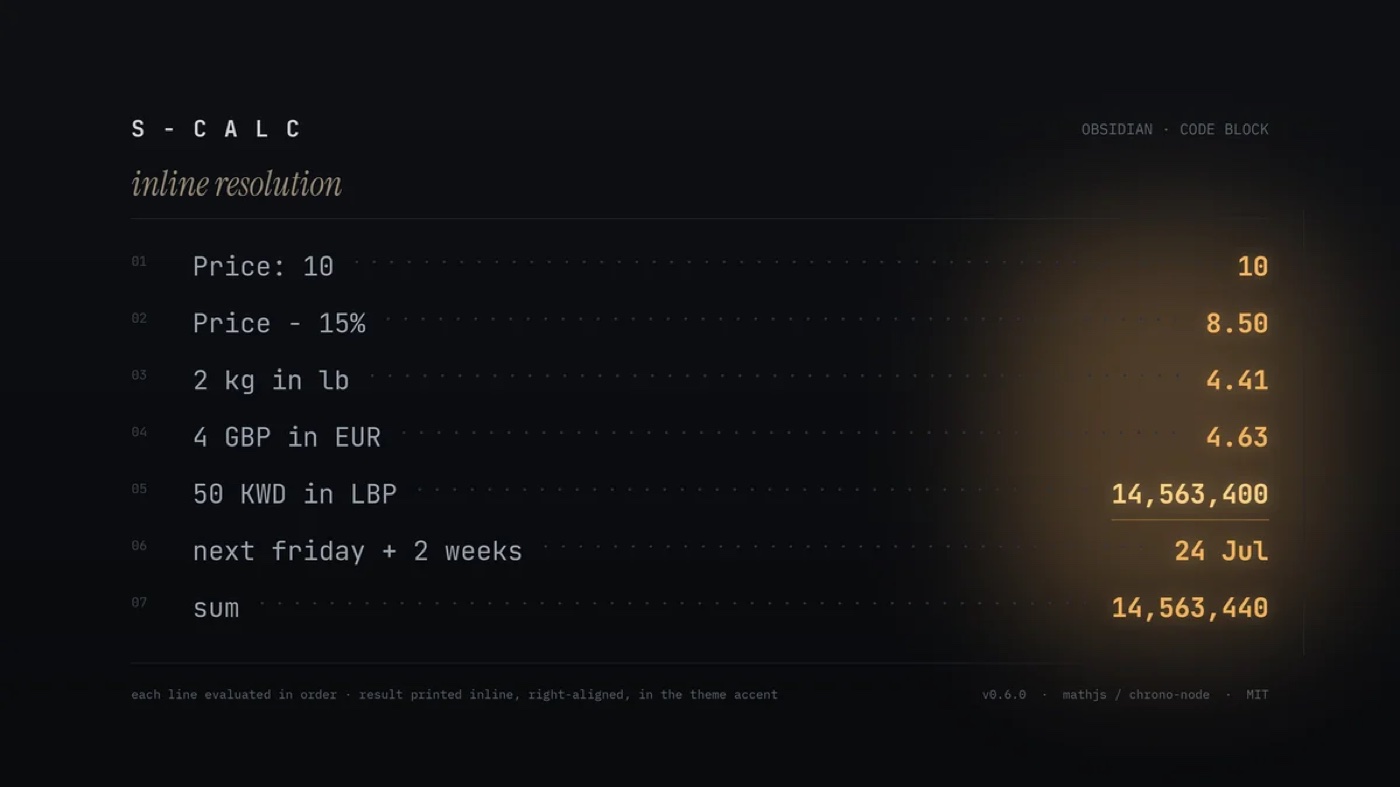
- Built with
- TypeScript, mathjs, chrono-node, CodeMirror 6
- Handles
- Arithmetic, variables, percentages, units, live currency, dates
- License
- MIT, in public use

What I build
The deep end of the API included
I run Obsidian as my own daily vault, so I already know where the API is awkward.
-
Internal tooling
Your team's process inside the vault they already live in. Nobody learns a new app.
-
API and data integrations
Your CRM, database, issue tracker or internal service, pulled into a note.
-
Custom views and editor behaviour
CodeMirror 6 work, live preview rendering and custom panels, where most plugins fall over.
-
Public plugins
Something to publish under your own name, built to pass community review the first time.
Timeline
Installable in your vault by week two
Most Obsidian plugins take 2 to 6 weeks from the first call to handover.
-
Week 1
Call and written scope
What it does, what it doesn't, and the price.
-
Week 2
First build in your vault
Something installable to try on real notes.
-
Week 3
Iterate on real use
-
Week 4
Iterate on real use
-
Week 5
Settings, docs, tests
-
Week 6
Handover
Source, docs, and a private build or marketplace submission.
What you get
Yours to publish or keep private
Documented well enough that another developer can maintain it without me.
- Working plugin, installed and tested in your vault
- Clean, documented TypeScript source you fully own
- Build and release pipeline
- Marketplace submission support, or a private build
- User documentation for your team
- Handover walkthrough

FAQ
Questions about Obsidian plugins
Your question isn't here? Ask it on the free call, or email safi.abdulkader@gmail.com.
How much does a custom Obsidian plugin cost?
Obsidian plugins start at $3,000. A focused internal tool that automates one workflow sits near that floor. A plugin with custom editor rendering, a settings interface and marketplace submission costs more. Scope and price are agreed in writing before you commit.
Have you actually published an Obsidian plugin?
Yes. S-Calc is in the official community marketplace, which means Obsidian reviewed its code before listing it. It is MIT licensed, so you can read the source.
Can a plugin pull in data from our own systems?
Yes. A plugin can call your API, database or internal service and write the results into notes, or show them in a custom view next to the editor.
Will it work on mobile as well as desktop?
It can, and it is decided in the scope. Obsidian mobile has no Node.js, so a plugin that needs file system or native modules stays desktop only.
Start a project
Tell me what you need
I reply within one business day with questions first, then a fixed quote.
Project request
Name, email and message are required
Other services