Mobile apps · Kuwait + GCC
Mobile app development in Kuwait
Custom iOS and Android apps for Kuwait and the GCC, with Arabic RTL and KNET payments planned from the first screen.
- Arabic RTL
- KNET
- MyFatoorah
- Tap
- Stripe
- iOS + Android
From $3,000 · 6-16 weeks · most projects under $25,000
Building for Kuwait
The part most quotes skip
It's also where mobile projects in this market run over budget.
-
Arabic RTL, designed
A layout flipped at the last minute looks flipped. Bilingual architecture from the first screen costs less than retrofitting it in month three.
-
Local payments
A Kuwaiti checkout that only takes international cards loses most customers at the last step.
- KNET
- MyFatoorah
- Tap
- Stripe
-
Local context
I've worked with clients in Kuwait, Bahrain and Saudi Arabia, including the data and business rules that come with each.
-
Store submission
App Store and Google Play listings from someone who has shipped there before and knows what gets rejected.
Where projects start
Three stages, one codebase
An MVP I build is meant to grow into the next stage, not be thrown away in six months.
-
Stage 01 Most projects start here
MVP
From $3,000
One user journey, everything else cut, and something real in your hands in weeks. Find out whether people want it before you spend the rest of the budget.
- One core user journey
- Builds you can install from week one of development
- Foundation built to extend
-
Stage 02
Growth
Scoped from your numbers
You have users and feedback. Features get added and the infrastructure scales to what the numbers now say.
- Features driven by real usage
- Infrastructure scaled to match
- Same codebase as the MVP
-
Stage 03
Full platform
Most projects under $25,000
Customer app, driver or vendor app, web dashboard, admin panel and reporting. I've built multi-role platforms for food, retail and services businesses.
- Customer and vendor or driver apps
- Web dashboard and admin panel
- Reporting
 One core user journey
The stack
Chosen per project, no default
The same person builds the app, the API, the database and the deployment, so nothing falls between two vendors.
- App
- React Native, Flutter, Expo
- API + logic
- Laravel, .NET
- Data + auth
- Firebase, Supabase, PostgreSQL, MySQL
- Deploy
- Docker, GitHub Actions
How it works
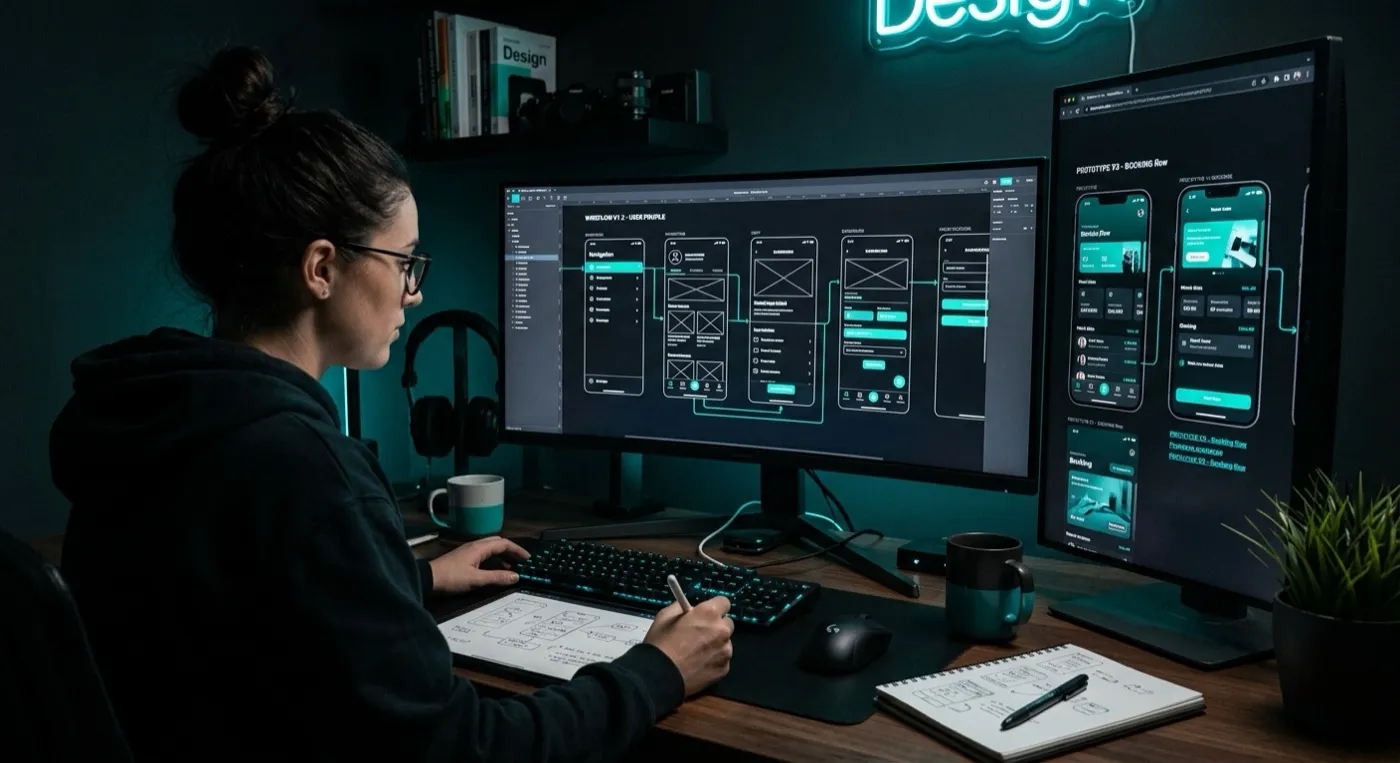
Wireframes before code
-
A call
Show me the idea and who it's for.
-
Scope
Users, core features, what's deliberately out, and the price.
-
Design + build
Wireframes first, then sprints with builds you can install.
-
Store + handover
App Store and Google Play listings, then source and docs.
What I'll tell you first
If a web app would serve you better than a native one, I'll say so before you pay.
It happens more often than you'd think. The same goes for the idea itself: if it needs a different shape, you hear it on the free call.
FAQ
Questions about mobile apps
Your question isn't here? Ask it on the free call, or email safi.abdulkader@gmail.com.
How much does a mobile app cost in Kuwait?
Projects start at $3,000 and most land under $25,000. An MVP that tests one core idea sits near the floor. A full ecosystem with a customer app, a vendor or driver app, a web dashboard and an admin panel sits at the top of that range.
Do you build for both iOS and Android?
Yes. React Native or Flutter gives you one codebase for both stores, and I handle the App Store and Google Play submissions.
Can you add Arabic and KNET payments?
Yes, and they are planned from the first screen rather than added at the end. Arabic RTL layouts and KNET, MyFatoorah, Tap or Stripe checkouts are part of the scope from day one.
Can we start with an MVP and scale later?
That is how most projects start. The MVP is built on the same codebase the growth stage extends, so nothing is thrown away when you add features.
Start a project
Tell me what you need
I reply within one business day with questions first, then a fixed quote.
Project request
Name, email and message are required
Other services