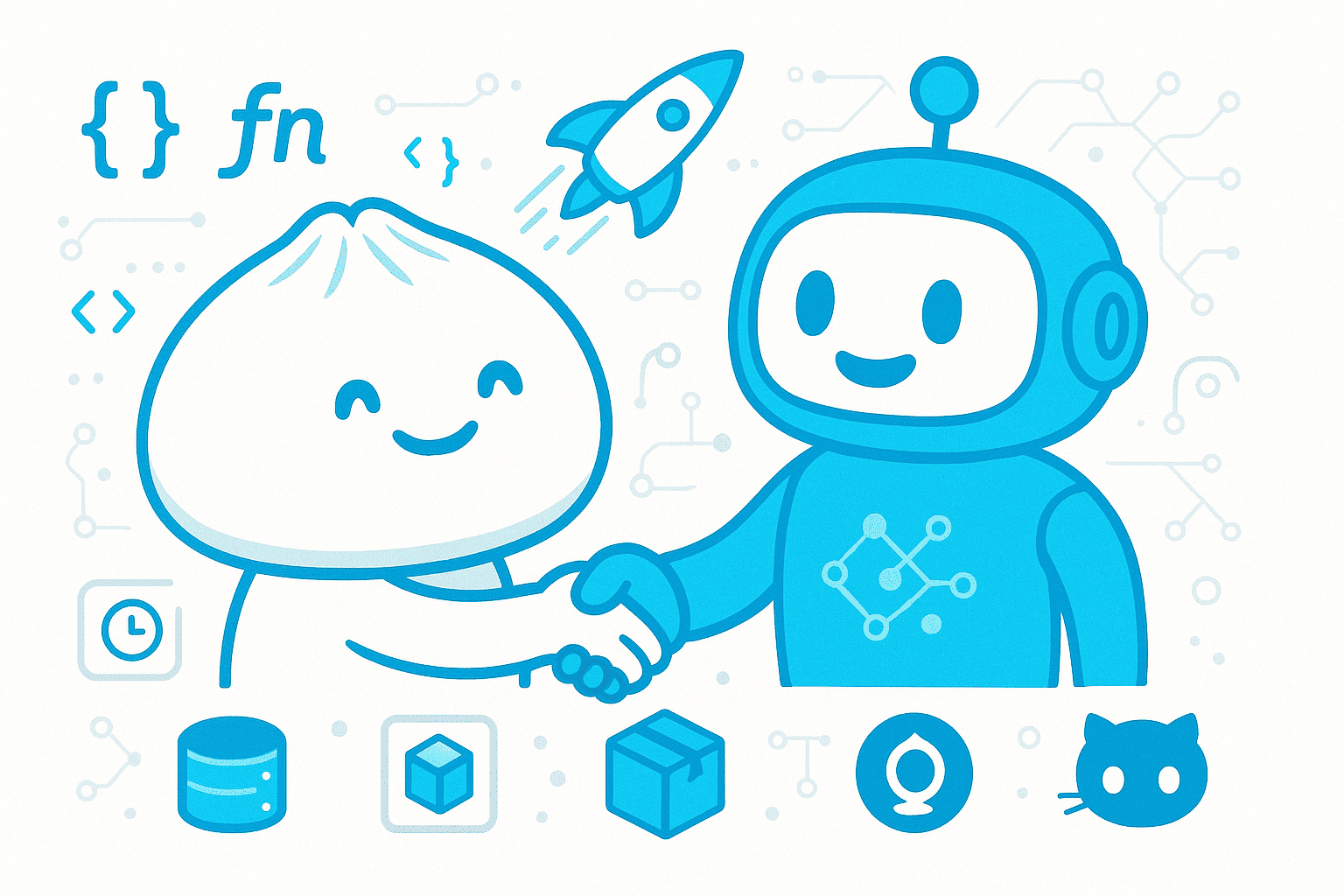
In a surprising move that sent shockwaves through the JavaScript community, Anthropic announced the acquisition of Bun, the high-performance JavaScript runtime founded by Jared Sumner in 2021. This acquisition comes just six months after Claude Code reached a billion-dollar run rate revenue milestone, marking a significant moment in the evolution of AI-powered development tools.
Table of Contents
- Introduction
- The Acquisition Announcement
- Why Bun Matters to Claude Code
- What Changes and What Stays the Same
- The Revenue Problem Bun Faced
- Why JavaScript Over Rust for AI Agents
- Bun's Single Binary Architecture Advantage
- Open Source Commitments
- The Future of AI-Driven Software Development
- Conclusion
Introduction
In a surprising move that sent shockwaves through the JavaScript community, Anthropic announced the acquisition of Bun, the high-performance JavaScript runtime founded by Jared Sumner in 2021. This acquisition comes just six months after Claude Code reached a billion-dollar run rate revenue milestone, marking a significant moment in the evolution of AI-powered development tools.
For developers who have been following Bun's journey from a side project to a venture-backed startup with 7.2 million monthly downloads, this news raises important questions: What happens to Bun's open-source status? Will the runtime continue to focus on general JavaScript development, or will it become exclusively tied to Anthropic's products? And most importantly, what does this mean for the future of AI-assisted software development?
The Acquisition Announcement
Claude Code's Billion Dollar Milestone
Anthropic's announcement highlighted an impressive achievement: Claude Code reached a billion-dollar run rate revenue in just six months since becoming publicly available. This rapid growth demonstrates the accelerating adoption of AI coding tools across the software development industry.
The announcement emphasized that Bun's acquisition is specifically designed to "further accelerate Claude Code" and improve the infrastructure powering Anthropic's AI coding products. With Claude mentioned 25 times, Claude Code 11 times, and Bun 18 times in the official announcement, the priorities are clear: this is primarily about strengthening Anthropic's developer tools ecosystem.
The Strategic Rationale
According to Anthropic's Chief Product Officer, "Bun represents exactly the kind of technical excellence we want to bring into Anthropic. Jared and his team rethought the entire JS tool chain from first principles while remaining focused on real use cases."
The decision aligns with Anthropic's strategic approach to acquisitions, focusing on opportunities that:
- Bolster technical excellence
- Reinforce strengths as the leader in enterprise AI
- Align with company principles and mission
Why Bun Matters to Claude Code
The Partnership History
Anthropic and Bun have been close partners for many months. Claude Code bundles Bun alongside its installation, using it as the runtime environment. This collaboration was central to the recent launch of Claude Code's native installer, which provides:
- Simpler installation process
- Improved stability
- No Node.js dependency requirements
- Single binary distribution
The Native Installer Advantage
The native installer approach solves a critical enterprise problem. Many companies require single, approvable binaries that IT teams can distribute internally without managing complex dependency chains. Previously, tools required both the application and the correct version of Node.js, creating approval and distribution headaches.
By bundling Bun as a single binary, Claude Code eliminates these friction points. This is a significantly cleaner approach than rewriting entire applications in Rust solely for binary distribution purposes, which some competing tools have done.
Installation Methods
Claude Code now recommends the native installer as the default installation method across platforms:
- macOS: Homebrew or curl
- Windows: IRM (Invoke-RestMethod)
- Linux: curl or package managers
What Changes and What Stays the Same
What Remains Unchanged
Anthropic and the Bun team were careful to address community concerns upfront:
Open Source Status: Bun remains open source under the MIT license. The code continues to be publicly available on GitHub with no plans to change licensing.
Team Continuity: The same team continues working on Bun. Nearly everyone from the Bun company (formerly Oven) joined Anthropic through the acquisition. For the one person still in the hiring process who couldn't join, Jared ensured they received a generous payout.
Public Development: Bun's development will continue to be conducted in public on GitHub, maintaining transparency with the community.
Core Focus: The roadmap remains focused on:
- High-performance JavaScript tooling
- Node.js compatibility
- Replacing Node.js as the default server-side runtime for JavaScript
- Runtime, bundler, package manager, and test runner improvements
Direct Incentive Alignment: As the announcement states, "Cloud code ships as a bun executable to millions of users. If bun breaks, cloud code breaks. Anthropic has direct incentives to keep bun excellent."
What Will Change
Faster Development Velocity: With Jared Sumner no longer distracted by running a company, dealing with investors, and managing fundraising, he can focus entirely on building. The team expects to ship updates and improvements faster than ever.
Enhanced AI Tooling Integration: The team will work closely with Claude Code developers to optimize Bun for AI coding tools, getting early insight into upcoming features and requirements.
Resource Availability: With Anthropic's backing, Bun can hire additional team members without worrying about runway depletion. Previously, every hire shortened the company's survival timeline, creating hiring paralysis.
Strategic Priorities: Expect less focus on features like Redis connectors or MySQL plugins built directly into Bun. Instead, expect laser focus on making Bun the best runtime for Node.js applications.
The Revenue Problem Bun Faced
Zero Revenue, Growing Concerns
Despite 7.2 million monthly downloads and growing 25% month-over-month, Bun generated zero revenue. This created sustainability concerns for developers considering betting their company's infrastructure on the platform.
The most common question Jared Sumner faced was: "If I bet my work project or company stack on Bun, will it still be around in 5 or 10 years?"
The Traditional Path Avoided
The typical venture-backed route would involve:
- Building a cloud hosting product integrated with Bun's runtime and bundler
- Competing directly with platforms like Vercel
- Requiring Jared's full attention on monetization instead of development
This path worked poorly for competitors like Deno, which struggled to make their cloud offering successful. More importantly, it would have forced Jared to stop doing what he does best: building developer tools.
The Funding Reality
Bun raised $26 million across multiple rounds:
- Initial funding from Kleiner Perkins
- $19 million Series A in September 2023 after the 1.0 launch
Despite having four years of runway remaining, the team recognized that simply raising venture capital isn't a satisfying answer to sustainability questions. Eventually, investors need returns, which means either finding revenue or raising more money indefinitely.
Why This Acquisition Solves It
The Anthropic acquisition allows Bun to:
- Skip the "VC-backed startup tries to figure out monetization" chapter entirely
- Focus exclusively on building the best JavaScript tooling
- Provide a concrete answer about long-term viability
- Give the team financial security and resources
Why JavaScript Over Rust for AI Agents
The Runtime Debate
Many AI coding tools have been built or rewritten in Rust, often justified by the need for single binary distribution. However, the choice of JavaScript (via Bun) for AI agents offers distinct advantages:
Fast Iteration: JavaScript's dynamic nature allows for rapid experimentation and modification, critical when AI capabilities evolve quickly.
Ecosystem Compatibility: Millions of existing npm packages work seamlessly, providing battle-tested solutions for common problems.
Developer Familiarity: More developers know JavaScript than any other language, lowering barriers to contribution and customization.
Native Add-on Support: Bun supports native add-ons when performance-critical sections need lower-level optimization.
The Single Binary Advantage
Bun's architecture as a single file executable provides unique benefits:
- No system-wide installation required
- Works even if users don't have Bun or Node.js installed
- Easy to bundle with CLI tools
- Fast startup times
- Simple distribution
This makes it ideal for AI coding tools like:
- Claude Code
- Factory AI
- Open Code
- Custom agent frameworks
The Performance Reality
Bun is dramatically faster than Node.js and Deno for most operations:
- Package installation
- Module bundling
- Test execution
- Cold start times
- Hot reload cycles
When AI agents are writing, testing, and deploying code at unprecedented velocity, these performance gains compound significantly.
Bun's Single Binary Architecture Advantage
How It Works
Bun compiles to a single executable file that includes:
- The JavaScript runtime
- Built-in bundler
- Package manager
- Test runner
- Standard library implementations
Any JavaScript project can be compiled into a self-contained binary that runs anywhere, making distribution trivial.
Why This Matters for AI Tools
AI coding agents need to:
- Execute code quickly to test changes
- Bundle and deploy applications rapidly
- Run in diverse environments without setup friction
- Maintain predictable behavior across systems
Bun's architecture addresses all these requirements elegantly.
Real-World Usage
The GitHub username with the most merged pull requests in Bun's repository is the Claude Code bot. The team has Claude Code set up in their internal Discord to:
- Help fix bugs
- Open PRs with tests that fail in earlier versions
- Test fixes in debug builds
- Respond to review comments
- Complete the full development cycle autonomously
This represents where AI-assisted development is heading: agents that can write tests, implement fixes, and iterate based on feedback.
Open Source Commitments
The Promise
Anthropic has committed that:
- Bun will remain open source
- MIT license will be maintained
- Development continues on GitHub
- The same team keeps working on it
- Investment will increase, not decrease
Community Skepticism
Despite these commitments, skepticism exists. Claude Code itself remains closed source, making some developers nervous about Bun's future.
Why This Commitment Matters
Anthropic's business success now directly depends on Bun's health. They've created a situation where:
- Millions of Claude Code users rely on Bun
- Breaking Bun breaks Claude Code
- Open source development maintains quality and catches bugs
- Community contributions improve the product
The incentive structure favors maintaining and strengthening Bun's open-source nature rather than restricting it.
The Future of AI-Driven Software Development
The Shifting Landscape
Two years ago, only inexperienced developers claimed AI would replace programmers. Last year, experienced developers pushed back, arguing AI tools weren't good enough for real software.
This year, the smartest engineers are acknowledging that things are changing rapidly. AI coding tools have moved from interesting demos to genuinely useful productivity multipliers.
The Runtime Implications
If most new code will be written, tested, and deployed by AI agents:
More Code Overall: Agents can generate far more code than humans, increasing total code volume.
Faster Iteration: Code gets written and tested much faster, requiring runtime performance to keep pace.
Detached Humans: Developers review and guide rather than write every line, making the runtime environment more critical for predictability.
Infrastructure Requirements: The tools and runtime must be fast, reliable, and well-documented for AI agents to use effectively.
Bun's Natural Fit
Bun started with a focus on making developers faster by:
- Reducing build times
- Accelerating package installation
- Speeding up test execution
- Improving hot reload performance
These same optimizations benefit AI coding tools, creating natural alignment between Bun's original mission and the future of AI-assisted development.
What Software Engineering Looks Like in 2-3 Years
Current trends suggest:
- Most boilerplate and routine code written by AI
- Humans focus on architecture, requirements, and review
- Faster deployment cycles
- More code maintained per engineer
- Greater emphasis on testing and validation
The runtime and tooling become more important, not less, as they need to handle increased volume and velocity while maintaining reliability.
Conclusion
The acquisition of Bun by Anthropic represents a significant moment in both JavaScript tooling and AI-assisted development. Rather than a company being absorbed and potentially sidelined, this appears to be a strategic investment in critical infrastructure.
For JavaScript developers, the commitments around open source, team continuity, and roadmap focus should be reassuring. Bun gains financial stability and resources while maintaining its core mission.
For the AI coding tool ecosystem, this signals the importance of runtime performance and developer experience. As AI agents write more code faster, the infrastructure they depend on becomes increasingly critical.
The key questions to watch going forward:
- Will Anthropic open source Claude Code to match Bun's open nature?
- How quickly will Bun's development velocity increase with dedicated focus?
- What new features emerge from the tight integration with Claude Code?
- Will this inspire similar acquisitions of developer tools by AI companies?
Time will tell whether this acquisition fulfills its promise, but the incentive alignment and team continuity suggest positive outcomes. For now, Bun users can continue building with confidence in the platform's long-term viability, backed by a company that depends on its success.
Key Takeaways
- Anthropic acquired Bun to strengthen Claude Code's infrastructure
- Bun remains open source under MIT license with the same team
- The acquisition solves Bun's revenue problem while preserving its independence
- Claude Code bundles Bun as a single binary for easy distribution
- JavaScript runtimes matter more as AI agents write more code
- Bun's performance advantages compound when AI tools iterate rapidly
- The deal provides long-term stability for companies betting on Bun
- Development velocity should increase with dedicated team focus
🤝 Need a Custom RSVP System or Dashboard?
I help businesses build tools that actually work , even on tight deadlines.
Whether you're planning an event, need internal tools, or want a custom dashboard for your team , I can help.
Reach out
📧 Email: safi.abdulkader@gmail.com | 💻 LinkedIn: @abdulkader-safi | 📱 Instagram: @abdulkader.safi | 🏢 DSRPT
Drop me a line, I'm always happy to collaborate! 🚀