The Vibe Coding Lie: Wrapper Tools vs Foundation Tools
"I built an app in 3 hours." Sure, but with which tool? Lovable and Claude Code aren't playing the same game. Here's the difference before you start.

5 min read


"I built an app in 3 hours."
Sure. But with which tool?
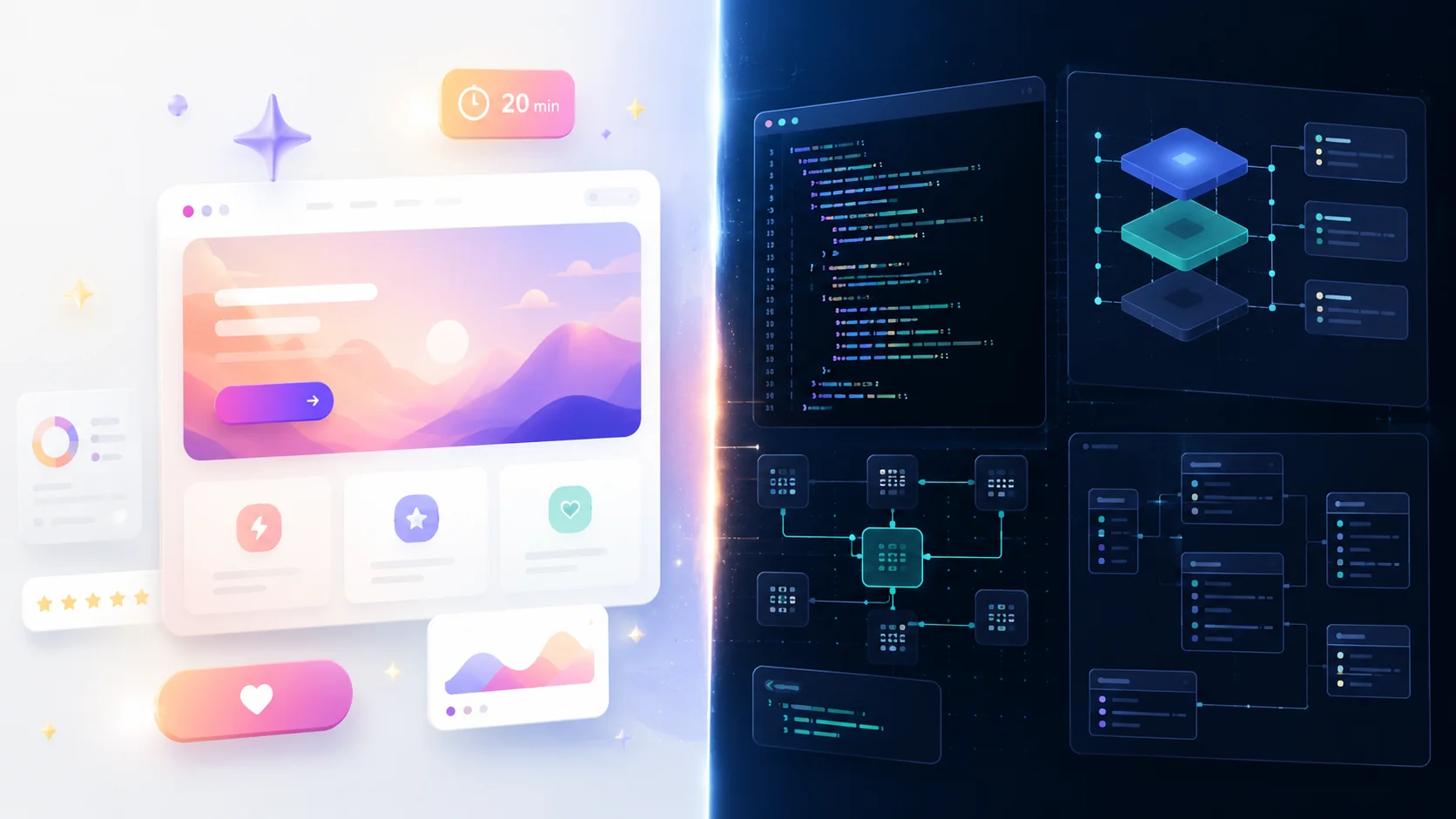
Because Lovable and Claude Code are not even playing the same game. One wraps an AI to make coding feel easy. The other was built by the people who made the AI that powers everything else. That difference shows up the moment your project stops being a screenshot and starts being software.
Here's the part nobody says out loud while they're posting their "look what I shipped" demo: the tool you pick decides what you can build before you've written a line of it.
Two Categories Most People Blur Together
There are really two kinds of AI coding tools, and the marketing makes them look identical. They aren't.
Wrapper tools — Lovable, v0, Bolt — optimize for:
→ Speed to first screenshot → Beautiful UI out of the box → Zero learning curve → "Look what I built in 20 minutes"
Foundation tools — Claude Code, Codex, Antigravity — optimize for:
→ System architecture → Complex multi-file projects → Production-grade structure → Actually understanding what you're building
The cleanest way I can put it: wrapper tools generate code. Foundation tools reason about code. One spits out a component that looks right. The other asks what that component breaks three files away.
I've watched both fail, by the way. A wrapper tool will happily generate a gorgeous auth screen and quietly wire it to nothing. It looked done. It wasn't.
The Difference Nobody Mentions: Tokens
Here's what actually separates them, and it's not the UI.
Wrappers cap you. A few edits, then "please wait." You're renting access to a model someone else owns, so every call costs them — and that cost gets passed straight to your patience. You hit a wall right when you're in flow.
Foundation tools don't do that. Almost unlimited tokens. You code for hours straight. Roughly 100x more edits in a session. No interruptions, no spinner, no "you've reached your limit for this hour."
That's not a nice-to-have. When you're debugging a real feature, the difference between "fix it now" and "wait 20 minutes" is the difference between shipping today and shipping never.
They Work Like Actual Agents
This is the part the screenshot crowd misses. Foundation tools don't just type code into a file. They operate.
- Search the internet for current docs and real solutions
- Run your scripts and actually test the code they wrote
- Compress images, rename files, restructure folders
- Debug and fix their own errors without you pointing at the line
- Chain five tasks together while you go make coffee
Claude Code doesn't write code so much as it works like a junior developer who never sleeps and never gets bored of the boring parts. I've handed it a failing test suite and come back to green. Try that with a tool whose entire job is making the first render look pretty.
If you want the full setup, I broke down my exact configuration in The Ultimate Claude Code Workflow Guide — that's the agentic part most people never turn on.
So When Do You Use Each One?
When your project is a landing page? Use whatever ships fastest. Genuinely. I'm not precious about it. A wrapper tool that gets a marketing page live before lunch is the right call — nobody's database depends on it.
But when you need real infrastructure?
- Database schemas that scale past 10 rows
- Authentication that doesn't break the first time someone resets a password
- State that survives a refresh
- A codebase another human can read in six months
That's foundation tool territory. And it's not snobbery — it's the actual lesson the model companies learned that wrapper companies are still pretending isn't true: the hard part was never generating code. It's generating the right code, in the right place, with the right architecture.
Anyone can produce a file that runs. Producing a system that doesn't collapse under its second feature is a different skill entirely — and it's the one that decides whether "I built an app in 3 hours" becomes a product or a graveyard repo.
The first time I tried vibe coding seriously I built a working invoice generator in a day — I wrote up exactly how and where it got messy in Trying Vibe Coding for the First Time with Claude Code. It shipped. But it shipped because the tool reasoned about the structure, not because it drew a nice form.
My Rule Now
Wrappers for demos. Foundation tools for products. That's it.
I'm not telling you wrappers are bad — they're excellent at the exact thing they're built for, and pretending otherwise is its own kind of dishonesty. The lie isn't "wrapper tools are useless." The lie is "they're the same thing, just pick the prettier one." For a longer take on where this whole movement helps and where it quietly hurts, I argued both sides in Vibe Coding: The Good, The Bad, and The Future.
The best tool depends entirely on what you're building. Just know which game you're playing before you start — because finding out at feature three, when the schema won't bend, is the most expensive way to learn it.
What to Do Now
Pick your next project and answer one question before you open any tool: is this a screenshot or a system?
If it's a screenshot — a landing page, a pitch demo, a "does this idea even land" prototype — open Lovable or v0 and ship it in an hour. Don't overthink it.
If it's a system — anything with a real database, real auth, or a second feature on the roadmap — start in Claude Code from line one. Retrofitting architecture onto generated mush costs more than building it right the first time. If you've never run a foundation tool with full agent permissions, read How to Use Claude Code Right and turn on the parts that make it act like a developer instead of an autocomplete.
Then build the thing — and notice, around feature three, which choice was the cheap one.
Last updated 29 May 2026 · filed under Tools, ai, claude code